What Is Contact Dermatitis?
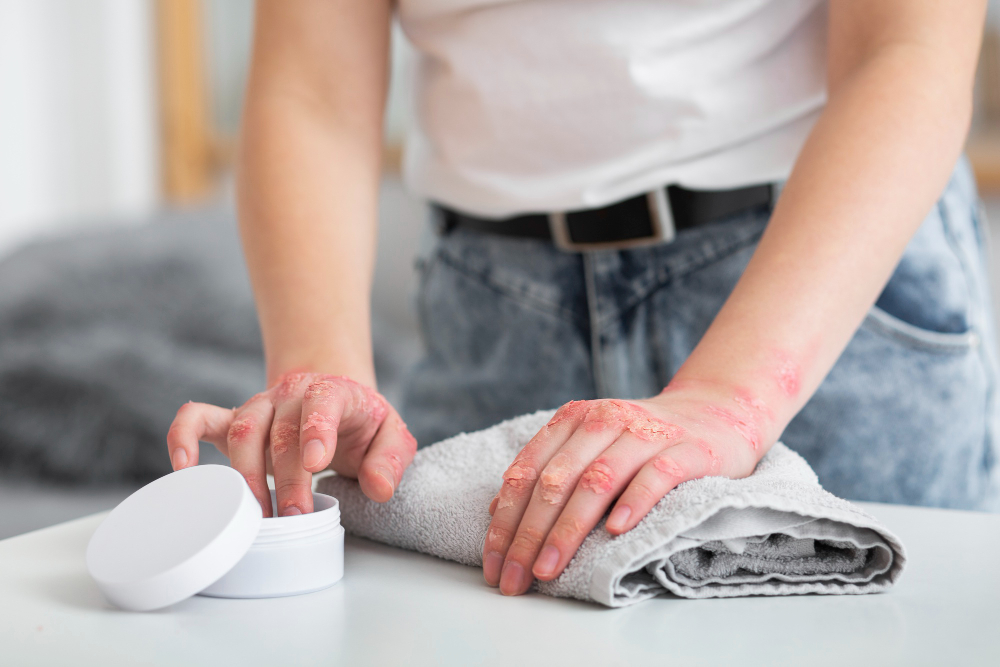
Contact dermatitis is a skin reaction that happens when your skin touches something irritating. Often, this condition causes redness, itching, or swelling. For many people, contact dermatitis from skincare products is common. Because the skin acts as a barrier, it can react to chemicals or natural ingredients. Even gentle products may cause problems for some people. According to the CDC, contact dermatitis is not contagious. However, it can be uncomfortable and sometimes painful.
Common Symptoms of Contact Dermatitis
Usually, symptoms appear soon after your skin touches the trigger. For example, you might notice:
Sometimes, symptoms can be mild. Yet, in other cases, they can be severe and last for days.
How Skincare Products Can Trigger Contact Dermatitis
Many beauty products contain ingredients that may irritate sensitive skin. For instance, fragrances, preservatives, and dyes are common triggers. Even natural oils or plant extracts can cause a skin reaction to beauty products. Because everyone’s skin is different, one product may be safe for some but not for others. If you notice redness or itching after using a new cream, it could be contact dermatitis from skincare.
Risk Factors for Developing Contact Dermatitis
Some people are more likely to get contact dermatitis. For example, you may be at higher risk if you:
Additionally, children and older adults may be more sensitive to triggers.
Diagnosing Contact Dermatitis
Doctors usually diagnose contact dermatitis by looking at your skin and asking about your routine. Sometimes, they may suggest a patch test. This test helps find out which ingredient is causing the reaction. Because other skin problems can look similar, it is important to get the right diagnosis. In some cases, your doctor may ask about your job or hobbies to find the cause.
Effective Treatment Options
Treating contact dermatitis starts with avoiding the trigger. For mild cases, over-the-counter creams can help. For example, hydrocortisone cream may reduce itching and swelling. If your symptoms are severe, your doctor may prescribe stronger medicines. In addition, keeping your skin moisturized helps it heal faster. According to dermatology experts, most people recover within a few weeks if they avoid the trigger.
Tips to Prevent Contact Dermatitis in Your Skincare Routine
Thankfully, you can take steps to lower your risk. Try these tips for preventing contact dermatitis:
Because prevention is key, always pay attention to how your skin reacts.
When to Seek Medical Advice
Sometimes, contact dermatitis can become severe. You should see a doctor if:
Early treatment can help prevent complications. If you live in a city like New York or Los Angeles, many dermatologists are available to help.